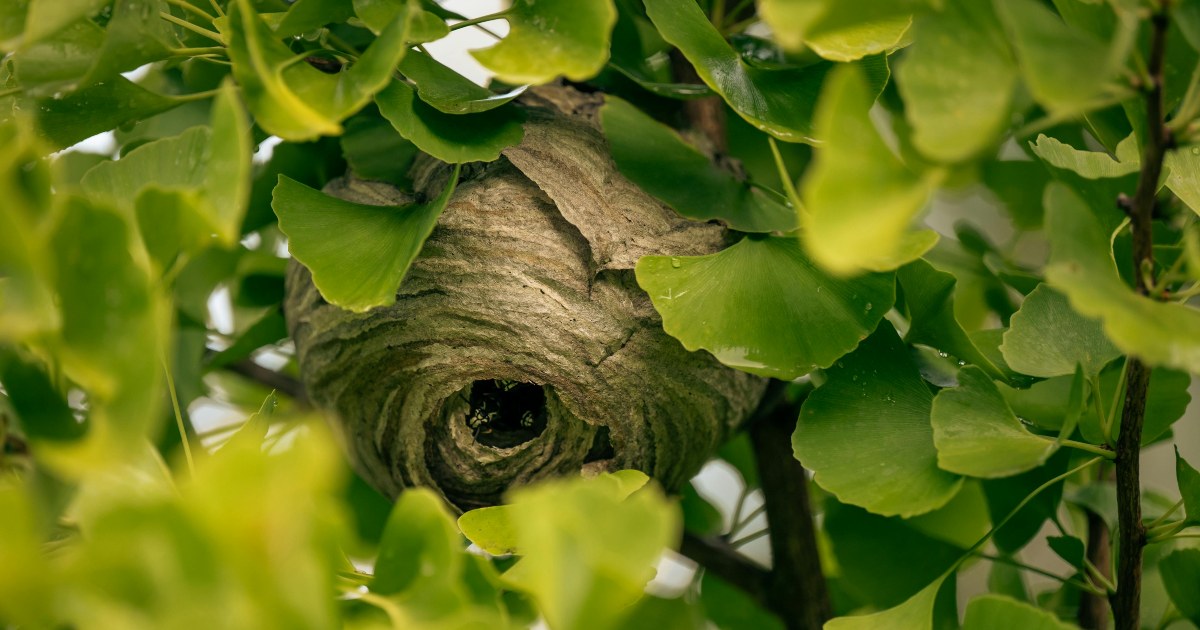
Many people believe that achieving effective wasp nest pest control always requires harsh chemicals, but removing these insects could also involve botanical products and other natural barriers that are even more productive. However, to do this, people should learn a bit more about wasps’ biological preferences and what naturally repels them to use nature defense mechanisms against them and their colonies. By understanding wasps’ behavior and weaknesses, homeowners can create a less attractive environment for them and discourage them from building their nests near their homes.
According to wasp experts and research, the most effective natural barriers involve a combination of structural exclusion, repellent vegetation, and rigorous habitat management that disrupts their search for shelter and food. If you are currently facing problems with wasps or you are looking to prevent unwanted visitors, implementing these five natural barriers can help you faster than you think. Here, you will understand how aromatic scent walls or physical exclusion methods leverage the evolution of plants and behavioral patterns of these social insects to keep your entryways, porches, and eaves clear.
Wasp nest pest control through strategic planting
One of the most strategic and powerful way to manage a free wasp environment is the use of bioactive plants. For centuries, traditional agriculture has used botanicals to influence insect behavior due to its good results. Surrounding your home with specific plants can create a chemical barrier that deters queens from founding nests near your living spaces.
As the American Chemical Society notes “almost every plant species has developed a unique chemical complex that protects it from pests”. This means that plants develop their own chemical signals, such as terpenoids and phenolics, which pests detect and avoid. For wasp nest pest control, concentrate on plants with strong and volatile scents that interfere with wasps’ chemical markers for locating food and ideal nesting sites.
Which aromatic plants actually work as repellents?
The best aromatic plants to repel wasps are from the mint and daisy families. Another effective plant in tropical and sub-tropical regions, could be the wild shrub, which has been used in the past as insect repellents due to their high levels of eugenol. For homeowners who would like to take advantage of aromatic plants on their backyard, they can use:
- Peppermint (Mentha piperita): It has been shown to repel a number of domestic pests, and its powerful perfume helps disguise the appealing smells of possible nesting places.
- Mexican Marigold (Tagetes minuta): This plant is a great repellent against many insects thanks to a simple ketone called 5-ocimenone.
- Basil (Ocimum basilicum): Basil is incredible intense for wasps due to its potent and volatile aroma.
By integrating these aromatic plants into your backyard, you will build a biological defense that keeps away potential queens interested in starting a new nest. Moreover, this wasp nest pest control management approach is not only eco-friendly, but it also promotes your garden’s biodiversity by attracting beneficial predators while repelling pests.
Can structural exclusion help the wasp nest pest control?
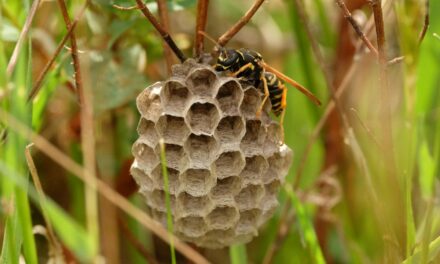
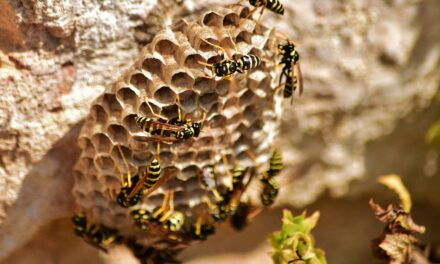
Besides aromatic plants you could also use a physical barrier to seal entry points. Most social wasps, such as the paper wasps (Polistes genus) prefer to build umbrella nests in sheltered locations with enough sunlight to provide warmth. Since wasps are skilled architects who construct gray pulp nests with chewed wood fibers and saliva attached to house eaves or inside wall cavities, you must use a structural wasp nest pest control strategy.
For example, using a fine insect mesh can effectively exclude wasps from sensitive areas like attics, porch ceilings and vents. As the Handbook on Pesticidal Plants states, using this method is essential for predictable pest management. Therefore, inspecting regularly the hidden corners of your home’s exterior and sealing minor cracks can keep wasps from forming their nests.
Managing food resources as an invisible barrier
The third barrier you could use is sanitation. Considering that wasps are opportunistic foragers who fuel themselves not only with nectar, but with human food sources. It is crucial to properly manage garbage and fallen fruit, as this is an often overlooked aspect of wasp nest pest control.
Rapid disposal of garbage around residences and at picnic areas should be encouraged, because some kinds of wasps will congregate around garbage that contains fruits. Thus, if you have fruit trees, always pick up fallen fruit daily as it will help remove the pull factor that attracts wasps into your property.
Habitat modification: the fourth defense
The fourth barrier to improving your wasp nest pest control is to remove the natural renter opportunities for wasps, as detailed here:
- Remove dead wood: Eliminate rotten logs and dead branches that wasps might use as cover.
- Prune dense vegetation: Thickening down large shrubs around the house minimizes the number of safe, shaded areas where a nest could go undetected.
- Manage water sources: Wasps require water to combine with wood fibers to form paper nests. Make sure birdbaths are far from the house and gutters drain properly.
Promoting natural enemies as the final barrier for wasp nest pest control
The last natural barrier is to use the balance of nature. While finding a wasp nest is not the best scenario, in some cases having social wasps in the distant corners of your property can actually be a good strategy, because they act as a biocontrol barrier for other garden pests like caterpillars. In this context, using wasps as allies help you focus on wasp nest pest control management, rather than total eradication.
Besides caterpillars, paper wasps are elite hunters that can help in organic gardening by reducing the population of harmful larvae. So having a wasp nest that is far away from high-traffic places or human activity can provide a push-pull effect, where wasps patrol your crops without being a risk for your or your family.