
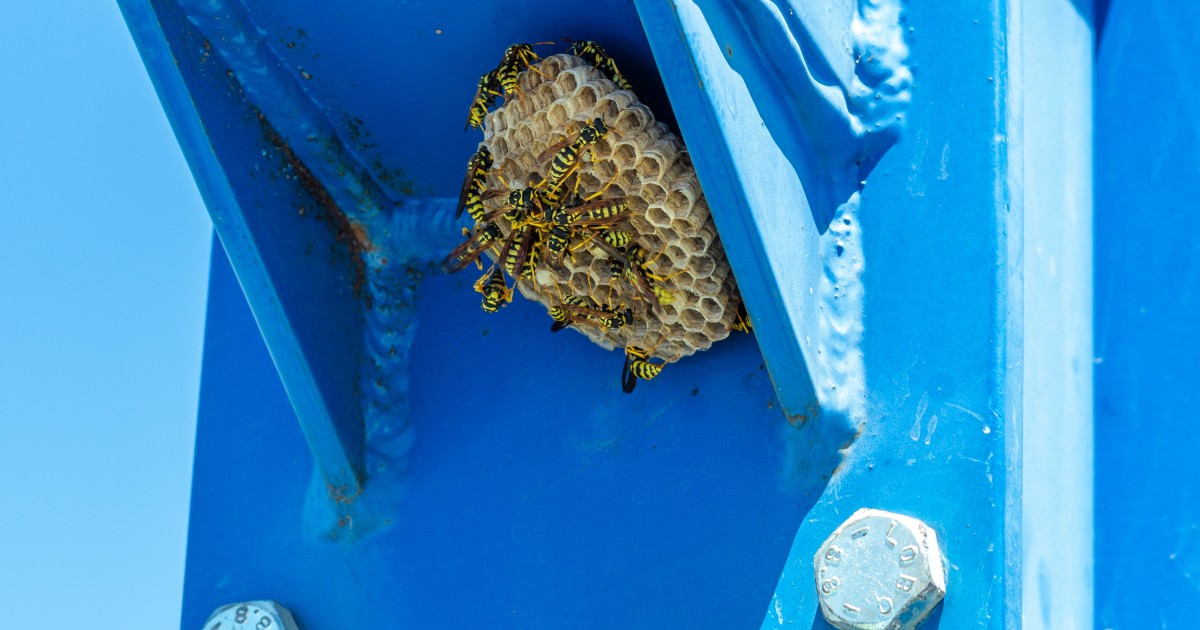
As the temperature rises, finding a wasp nest behind shutters is a common problem across the country. Wasps like these types of locations as they provide a perfect microenvironment for their colonies. Once the queen is established and foragers are flying around the nest, it is important to ask yourself if you should tackle the problem with a wasp insecticide or call a professional removal service.
In this case, while there are many available products on the market, the complexity of the nest’s location will probably suggest calling an expert to avoid potential risks. To determine the best course of action, homeowners should first understand why wasps are drawn to their windows as a first step. Social wasps, particularly paper wasps, are known as “primitively eusocial”, which means that they live in colonies composed of one queen and workers.
Although wasps are beneficial predators that help hunt and control garden pests like caterpillars, the place they choose to build their nests often could put them in direct conflict with humans. If you recently discovered a wasp nest behind shutters of papers wasps, bear in mind that you are dealing with the least aggressive wasps compared to hornets and yellowjackets, but still, safety protocols are needed since they could feel attacked and defend their nests vigorously.
Wasp nest behind shutters provide the ideal structural environment for paper wasps
Finding a wasp nest behind shutters is more frequently than you think, because this location is rooted in the biological needs of the colony. As Downing & Jeanne (1986) researchers who analyzed wasps’ nest architecture stated, These insects make their nests out of a paper-like material composed of masticated wood tissue and saliva. Because wasp nests lack an outer protective envelope, and have usually an umbrella shape, they are highly vulnerable to environmental factors such as strong winds and heavy rain that could destroy the colony. Therefore, finding an enclosed space like shutters can offer the protected structure of overhanging structures or hollow trees in nature.
Also, certain paper wasps species like polistes carolina have a documented predilection for building nests on or around residential houses, as they feel protected near these places. Previous research on wasp behavior indicates that paper wasps tend to seek out enclosed cavities to protect their colonies from harsh weather and predators. Furthermore, a wasp nest behind shutters benefits from a well-balanced microclimate encouraging to larval development, especially in the early spring. This location also allows wasp nests to remain hidden from potential vertebrate predators.
Is it risky to treat a wasp nest behind shutters without professional help?
Dealing with wasps is always a potential safety hazard if you don’t follow certain steps and strategies. The primary risk of removing a wasp nest behind shutters yourself is the potential of getting stung. While a solitary wasp might only sting once, as paper wasps live in big colonies multiple insects could sting people if they feel their nest is under attacked or disturbed. Also, keep in mind that wasps stings besides being painful, are currently a major threat for humans due to the anaphylactic shock caused by its venom.
If you discovered a wasp nest in your home or on your property and have a known allergy to Hymenoptera venom, do not attempt a DIY treatment because a systemic reaction can occur within minutes. In these cases always contact a professional expert removal. Other circumstances when you should call a professional is if the wasp nest behind shutters is high off the ground or tucked deep into the architectural voids, as commercial sprays may not be effective to reach the nest and kill the wasps. When thinking about removing wasps yourself or contacting an expert, is always important to know if you have the confidence, effective insecticides and protection gear to do it.
Otherwise, contacting an expert could be the best option since they have specialized equipment, including veils, gloves, and heavy clothing, to protect themselves while ensuring the insecticide reaches the core of the colony. Professionals are also trained to handle secondary nests, which may appear when species like Vespa simillima or Vespa crabro relocate their colonies to more expansive cavities as they grow. Without the right reach, a homeowner with no professional experience might only aggravate the infestation.
How do botanical alternatives compare for managing a wasp nest behind shutters?
Most people believe that only synthetic insecticides are the most efficient product to manage wasps. Still, botanical sprays containing pyrethrins are also a valid and effective option for a wasp nest behind shutters. Pyrethrins are plant-derived compounds that are commonly used in “aerosol bombs” to destroy overwintering queens or small incipient nests. These chemicals kill insects quickly, have limited mammalian toxicity, and degrade quickly in the environment.
However, for an old and well-constructed wasp nest behind shutters, these natural options may lack the residual power required to eliminate foragers that are away from the nest during application. Considering that these nests are located in precarious, difficult spots, it might be more difficult to reach and saturate the entire nest with the botanical spray. Thus, leaving them to experts can help you eliminate the wasp nest and clean thoroughly to avoid future infestations.

