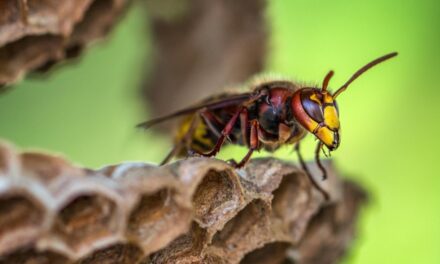
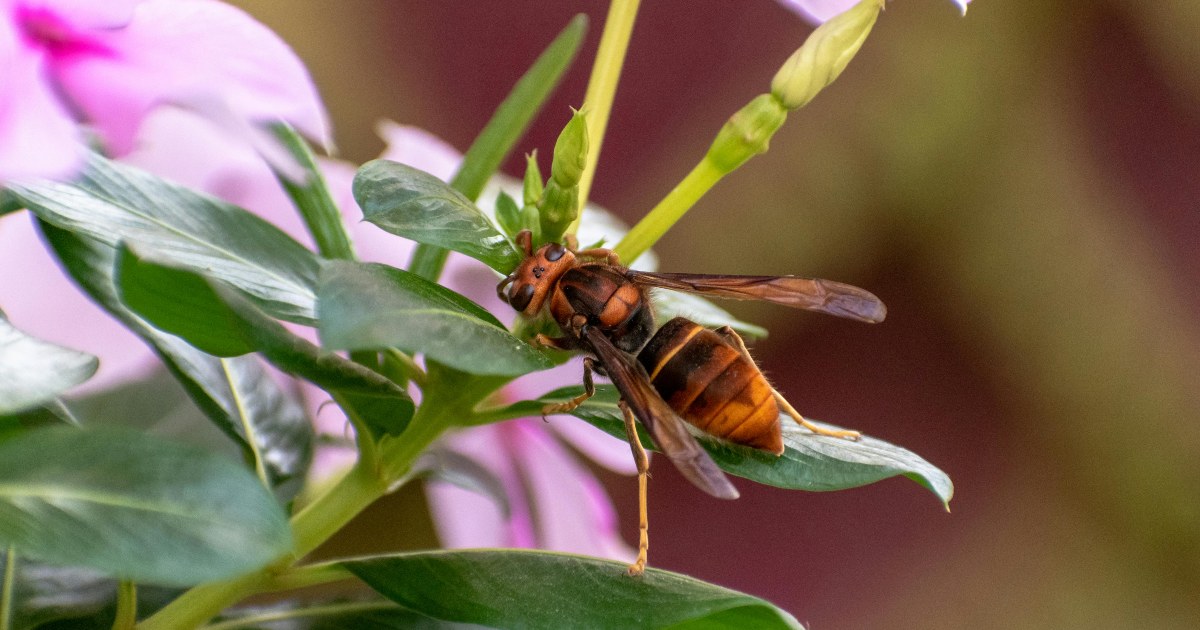
During the spring, foundress wasps begin searching for new, suitable locations to establish colonies. Although wasps are beneficial for the environment, finding a wasp nest on window frames, porches, or under eaves can be a significant concern for homeowners. Wasps are social insects known for constructing complex nests with a mix of wood fibers and their saliva.
These master architects can be very aggressive if they feel attacked, so having a nest near high-traffic areas like windows can lead to accidental stings if the wasp nest is swatted. To manage a wasp nest on window, homeowners can use wasps’ natural biological and behavioral traits to discourage them from choosing your home as a nesting site.
One way in which you can effectively prevent a wasp nest on window without the need for synthetic chemicals is by understanding their territorial nature and using olfactory decoys made from essential oils. In this article, we would like to explore how natural extracts and simple DIY interventions can act as powerful deterrents to counteract these intruders and keep your windows wasp-free.
How to prevent a wasp nest on window frames using natural scents
Even though most people believe that visual decoys are the most effective, chemical decoys are always the best choice for keeping wasps away. For example, aromatic plants produce secondary metabolites that act as natural self-defense mechanisms against a wide variety of pests. Essential oils like clove, spearmint, and citronella are often good repellents. Thus, using these scents around your home will create a chemical decoy that discourages foundress wasps for building a wasp nest on window structures.
There are some specific compounds that have shown high efficacy in scientific trials such as eugenol. As research from the International Centre of Insect Physiology and Ecology highlights, eugenol is the main volatile component of clove oil, which has strong insect repellent qualities. Similarly cinnamon oil has an active ingredient known as cinnamaldehyde that is used in commercial biopesticides to deter pests. Applying these oils to window frames create an environment foundress that will likely bypass in favor of more neutral smelling locations.
Using essential oils is advantageous for homeowners as they degrade fast in the environment and have low mammal toxicity, making them safe for your family and pets. Implementing these chemical and aromatic barriers before wasp season can significantly reduce the probability of finding a wasp nest on window.
Can visual decoys stop a wasp nest on window glass?
Besides using scents as chemical barriers, understanding the physical architecture and social behavior of wasps can help people get more clues for effective visual deterrents. Social wasps, specially paper wasps tend to return to the vicinity of their natal nests to found new places to start a new colony. Also, as they are highly competitive, foundresses often engage in falling fights or usurpation attempts to take over the existing nest.
Evidence suggest that due to this intense competition for nesting sites, foundresses may avoid an area that appears to be occupied. While the success of commercial imitation nests is in question, insect biology demonstrates that they employ visual signals to relocate feeding patches and possibly to assess the presence of competitors.
This means, that a well-placed visual decoy similar to the gray, papery pulp wasp nest might trigger a flight response in a solitary foundress looking to avoid violent confrontations. However, it is important to pair these visual decoys with botanical repellents to prevent a wasp nest on window frames or other locations near your property, as wasps rely heavily on olfactory cues to recognize nestmates and territories.
What DIY solutions keep a wasp nest on window away?
Creating your own decoys and deterrents is both cost-effective and simple. Because many essential oils are routinely used as culinary herbs and spices, they are typically excluded from the EPA’s stringent toxicity data standards, allowing for simple DIY formulations. For example, homeowners can create a spray using mix of water, a bit of soap and oils such as rosemary, peppermint, thyme and clove, which are regularly used in commercial products to kill and repel crawling insects on contact.
Applying this DIY repellent spray to the undersides of window eaves, doors and window frames can disrupt the foundress’ scouting behavior and prevent the constructions of a wasp nest on window skills, before it even begins. Another approach you can take advantage of, is using plant-based powders since they have been used as a safe and effective way to ward off household and agricultural pests.
Lastly, neem derivatives, such as azadirachtin, can also as act as potent feeding deterrents and growth regulators, though keep in mind that their primary use is for incapacitation rather than simple repulsion. Combining these herbal ingredients and applying them regularly is a harmonious and nonviolent pest management strategy. Taking these actions early in the spring and installing natural decoys will help you maintain your garden’s biological richness while also preventing wasp nests on windows from becoming a safety problem.