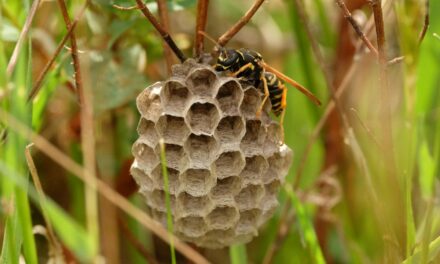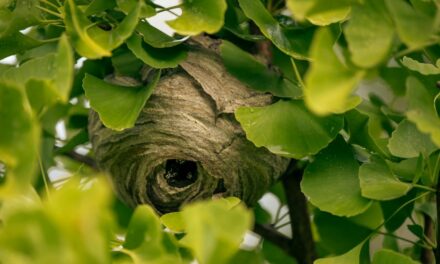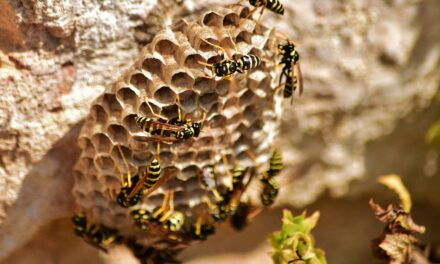
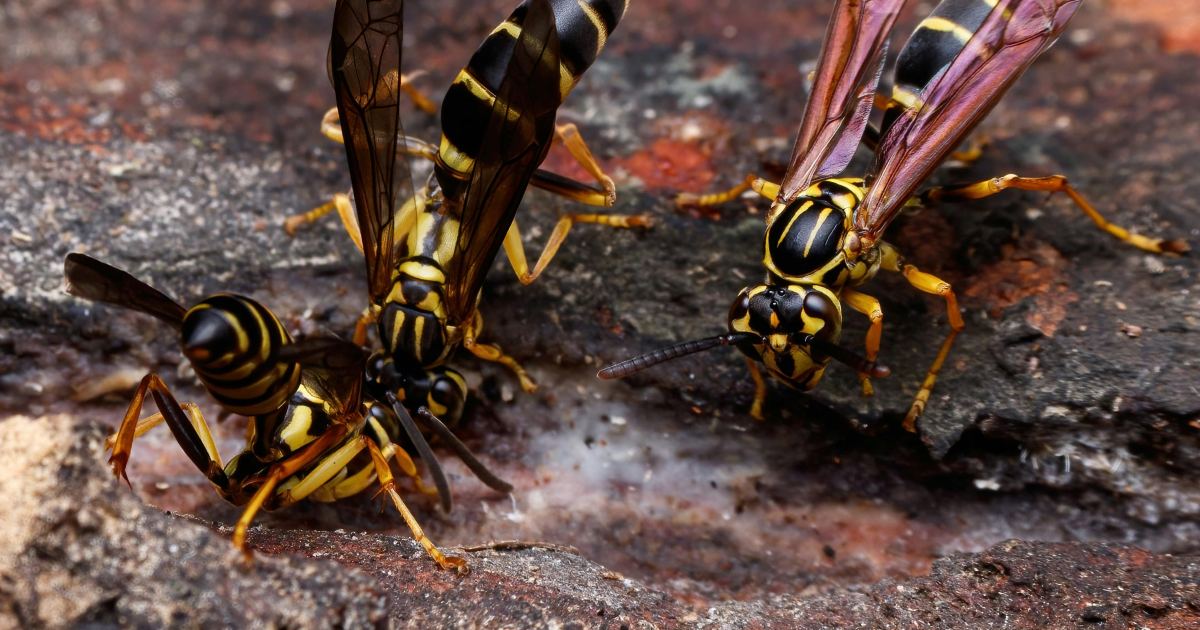
If you are dealing with a persistent wasp problem, by now you should know that it requires more than just knocking down the wasp nest, as you must address the invisible chemical signals they left behind so other foragers and new queens come back. This wasp nest how to remove pheromone guide will help you understand the signals or chemicals that naturally draw wasps back to the same eaves, porches, and window frames year after year. Wasps are highly social insects that depend on complex chemical communication to coordinate their colonies.
Even after you remove a wasp nest, hydrocarbons known as oily chemical markers will remain on the surface, attracting other scouting queens and returning foragers. To break this pheromone cycle, homeowners need a specialized botanical product that not only repels but also effectively sanitizes the site. According to wasp experts, essential oil-based solutions have proven to be the most effective tools for this task due to their unique ability to entirely dissolve these biological markers. By following this wasp nest how to remove pheromones strategy, people interested in repelling future infestations of social wasps and ensuring that their property remains free of wasp chemical marks.
Biology and the wasp nest how to remove pheromones guide
To avoid wasps from returning near your property, you must first understand a biological behavior called philopatry. Based on wasp research, paper wasp foundresses have a strong tendency to return to their birth site to start new colonies in the spring. This behavior stems from their environmental and heritable ability to recognize odors, which is learnt within the first few hours after they emerge from their silk cocoons.
Understanding this chemical attraction is critical to the wasp nest how to remove pheromones process since these scents are absorbed by both the wasp nest material and the specific ingredients used by queens. Worker wasps also leave footprint pheromones as they walk across the nest and fly surrounding surfaces. These chemical markers help foragers to accurately locate the nest entrance, even in complex residential environments. It is crucial to understand that as these wasp markers are composed of methyl-branched alkanes that are not easily washed away by water, standard cleaning methods won’t work.
Regular cleaning won’t dissolve these signals as these oily secretions permeate the substrate, providing a long-lasting signal that the site is safe and viable for nesting. This is why simply removing the paper structure is not enough, because the chemical memory of the colony will persist on the wood or vinyl. For this reason, the wasp nest how to remove pheromones strategy recommends products capable of breaking down these lipophilic compounds to fully reset the area’s chemical profile and ensure a successful intervention.
Yes, essential oils can help destroy wasp markers. There are many essential oils that could be used for this task, but here in our wasp nest how to remove pheromones guide, we’ll focused on the essential oils that demonstrate a better alternative to synthetic insecticides. For instance, products developed by companies like Wondercide use a blend of oils such as rosemary, peppermint, clove and thyme oils which are naturally lipophilic.
This means they can rapidly permeate surfaces and dissolve the persistent hydrocarbon signatures left by wasps. As noted in the Green Pesticides Handbook, “essential oils are complex mixtures of volatile compounds” that have solvent properties to disrupt the waxy layers and chemical signals left by wasps. Unlike synthetic chemicals that only target the wasp’s nervous system, these botanical extracts physically disrupt the chemical residues on the substrate while providing a high degree of volatility to completely clean out the whole area.
Additionally, these products are the best solution homeowners could use due to their dual mode of action. First, the oils’ terpenoid contents function as fast-acting neurotoxins in insects, targeting the octopaminergic system, a receptor spot that mammals and fish do not share. Second, essential oil’s strong aromatic profiles act as behavior-modifying repellents that block these insects olfactory receptors.
Using botanical oil blends will help you mask the existing nest odors with a scent that is biologically repulsive to scouting wasps. By applying these botanical oils, you can also establish a sensory barrier that prevents new queens from being drawn to the previous nest location, ultimately breaking the cycle of re-infestation. For these reasons, adding essential oils to your wasp nest how to remove pheromones strategy is one of the most efficient and safe approaches to manage and prevent wasps.
Wasp nest how to remove pheromones effectively with botanical products?
Removing pheromones effectively and completely is possible with a thorough application and timing. Keep in mind that is best to treat the area at night as wasps are less active during these hours. By doing this you ensure that remaining insects are contacted by the treatment. After removing the wasp nest you should apply the botanical product directly on the spot and within a surrounding three-foot radius for a successful cleaning.
Considering this radius will neutralize even the satellite markers left by walking workers. Recent studies have also shown that certain essential oil constituents, such as eucalyptus, rosemary, and camphor laurel, work synergistically to improve penetration through the insect’s outer shell and into the substrate, increasing their effectiveness at deep cleaning.
Lastly, once you completed the final step of the wasp nest how to remove pheromones guide, you will see that wasps simply start to go away to find a new location that isn’t chemically hostile for them. Applying the natural approach from the wasp nest how to remove pheromones guide allows homeowners to harness the life force of plants to protect your home while respecting the ecosystem.