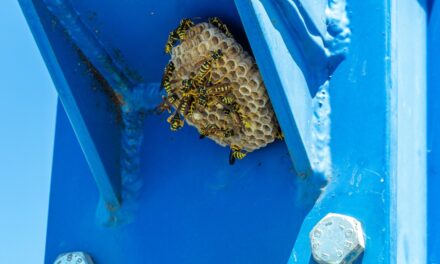

Dealing with wasps on your property can be a headache for most people, but not knowing the right time to remove these insects could make it worse or even put your family or pets at risk. According to wasp researchers, the evidence suggests that the most effective strategy is to remove wasp nest at night, contrary to common belief.
Reading online, you can find several blogs saying that removing nests at night could be dangerous, as people fear that darkness might make the removal process more dangerous. However, wasp behavior indicates that nighttime offers unique safety advantages compared to daylight. When homeowners choose to remove a wasp nest at night, they will act more efficiently, as the colony is at its lowest activity level and most vulnerable to management. Because there is so much information out there, we’d like to present the scientific data supporting nocturnal removal and debunk common myths about visibility and risk.
Why should homeowners remove wasp nest at night?
Based on wasp behavior research the most effective time to apply insecticides or try to relocate the nest is at night. The main argument to remove wasp nest at night is that most wasps, including active foragers, will be at the nest at these hours. During the day, paper wasps are highly active with foraging peak between 11:00 a.m. and 3:00 p.m. If you attempt to remove the nest during these hours, it might be harder and riskier as you could encounter aggressive foragers, whereas choosing to remove wasp nest at night ensures that the entire residents of the colony will be contained and handled at once.
More importantly, social wasps “primitively eusocial,” meaning that in case they feel threaten they will be highly protective of their queen and brood. According to The Social Biology of Wasps, “the defensive behavior of social wasps is primarily directed toward the protection of the colony’s reproductive core,” which explains why any perceived threat to the wasp nest can trigger a rapid, collective response from foragers.
Since you could end up with multiple stings when disturbing a paper wasp nest, minimizing their ability to fly is a critical safety measure. Based on researches analysis, wasps are effectively dormant and inactive during late evening and early morning hours, that could be a better timing to act. For this reason, when you decide to remove wasp nest at night, you will be dealing with a dormant population that is much slower to respond to threats.
Nocturnal removal is dangerous due to low visibility?
Poor visibility is one of the most common myths regarding nocturnal removal, as people who want to remove wasp nests will need a light source. Nonetheless, entomological safety protocols actually contradict this belief, because its improbable for wasps to mount a coordinated attack in the dark during their idle hours. In fact, most wasp experts suggest that if homeowners decide to remove wasp nest at night, they should use a flashlight with a red filter, since social wasps can’t see red light well and will be less likely to be attracted.
Likewise, safety data reveals that paper wasps are usually “neutral to friendly” and way less aggressive than hornets or yellowjackets, typically only stinging people if their nests are swatted. When people choose to remove wasp nest at night, the risk of accidental physical contact or swatting the nest is minimized because they can approach a stationary target, instead of dealing with foragers flying around the nest entrance.
According to evidence-based management strategies when you remove wasp nest at night you will have several options depending on the wasp nest’s size and location on your property. For a small nest with a single queen, its recommended to carefully knock the wasp nest down with a broom and clean the location so the queen will relocate elsewhere. But, if dealing with a larger colony that requires removal or destruction, researchers suggest that applying a botanical insecticide from a safe distance is far more effective at night.
The reason behind this argument, is that wasps are not directly treated will return to the nest after dark, where they will be exposed and knocked down due to the residual treatment. Even though paper wasps are less aggressive and targeting the nest at night could reduce the risk of getting stung, preparation is key for a successful nocturnal removal.
If you decided to remove wasp nest at night, please remember to wear protective clothing, including long sleeves, pants and gloves suitable for wasps. Also, be aware of not standing directly under and overhead nest, as wasps could fall still retaining their ability to sting for a short time. After applying the botanical insecticide let the treatment work for at least 24 hours before removing the nest. Following these easy steps and the proper timing could help you and other homeowners handle wasp infestations more efficiently while minimizing the risk of getting stung or suffering a severe allergic reaction to wasp venom.